


A new Dutch study led by Dr Isabelle van der Meulen and colleagues examines the long-term effects of puberty suppression on sexual function in transfeminine people who underwent vaginoplasty (in adulthood), comparing those who began this treatment early in puberty (Tanner Stage 2/3) with those who began late (Tanner Stage 4/5). Puberty suppression using GnRH agonists (GnRHa) aims to prevent the development of unwanted secondary sexual characteristics and provide time for exploration of gender identity and for deciding (or not) on transition goals.
However, the lack of data on the impact of these treatments on future sexuality – particularly depending on the timing of initiation – has raised clinical concerns. It has been suggested that the absence of testosterone secretion during pubertal pause, followed by estrogen administration, could negatively affect future sexual function.
The results show, however, that 91 % of participants reported sexual desire after surgery, 89 % reported sexual arousal, and 78 % achieved orgasm, with similar rates between groups treated early or late in puberty. The majority of those treated early had intestinal vaginoplasty, while those treated late more often underwent penile inversion vaginoplasty. These surgical differences did not affect outcomes for desire, arousal, or orgasm after surgery. It is notable that these rates are comparable to those in cisgender women, about 70 % of whom frequently achieve orgasm, though about 10 % never do.
Regarding sexual difficulties, 67 % of sexually active participants reported at least one problem, such as pain during intercourse (52 % of the reported problems). These difficulties were similar across the two treatment groups. An important factor contributing to these sexual difficulties was feelings of body shame (57 %) and fear that a partner would discover their surgery (58 %), highlighting the importance of psychological and sexological follow-up. Here again, cisgender women also frequently experience sexual difficulties (42 % of cisgender women in the Netherlands and 43 % of cisgender women in the United States).
Importantly, the experience of orgasm before surgery was not necessary to achieve orgasm afterwards. Among participants who had not experienced orgasm before surgery, 75 % were able to experience one postoperatively. This suggests that the timing of puberty suppression (early vs late) does not negatively impact the ability to achieve orgasm or other aspects of sexual function.
In conclusion, this study provides reassuring data on the impact of early puberty suppression and transition-related treatments on sexual function in transfeminine people. It also underscores that sexuality goes beyond anatomical functionality, involving psychological, relational and cultural dimensions. These findings should encourage tailored sexological care and further research on overall wellbeing after gender-affirming surgery.
To access the full study, click here.
More news

The Netherlands strengthens its gender-affirming care model for trans minors
The evidence supports gender-affirming care
Read more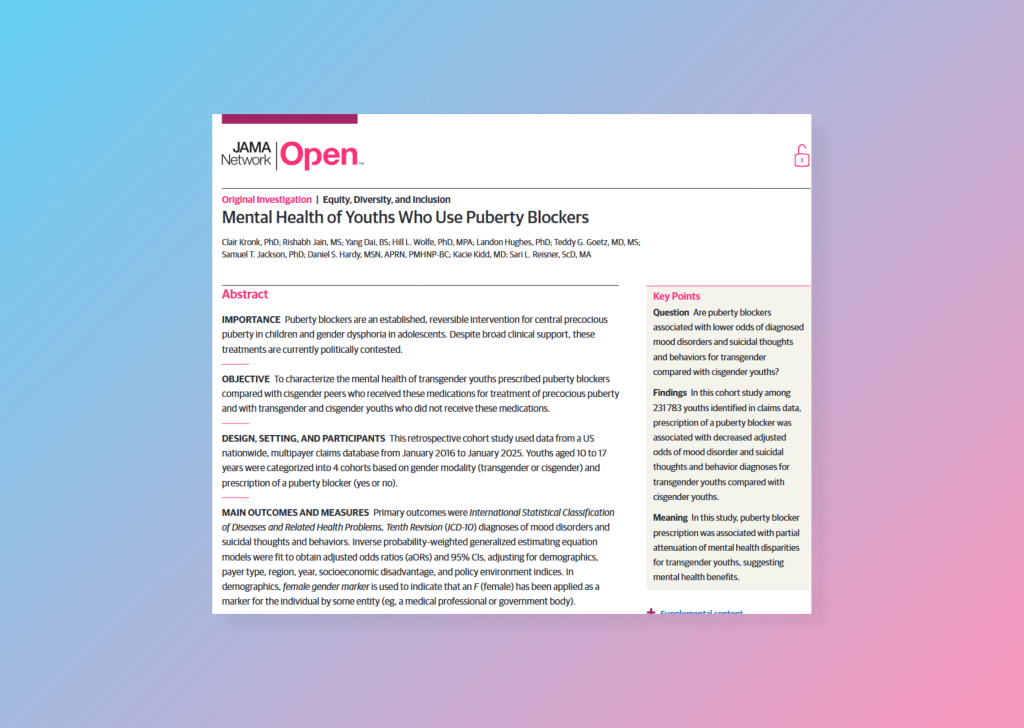
Puberty Blockers and Suicidality: New Study of 230,000 Youths
Lower Suicidality Among Transgender Youths
Read more
Without consent: the scientific misconduct scandal at Norway’s national centre for trans youth
Illegitimate research on trans minors
Read more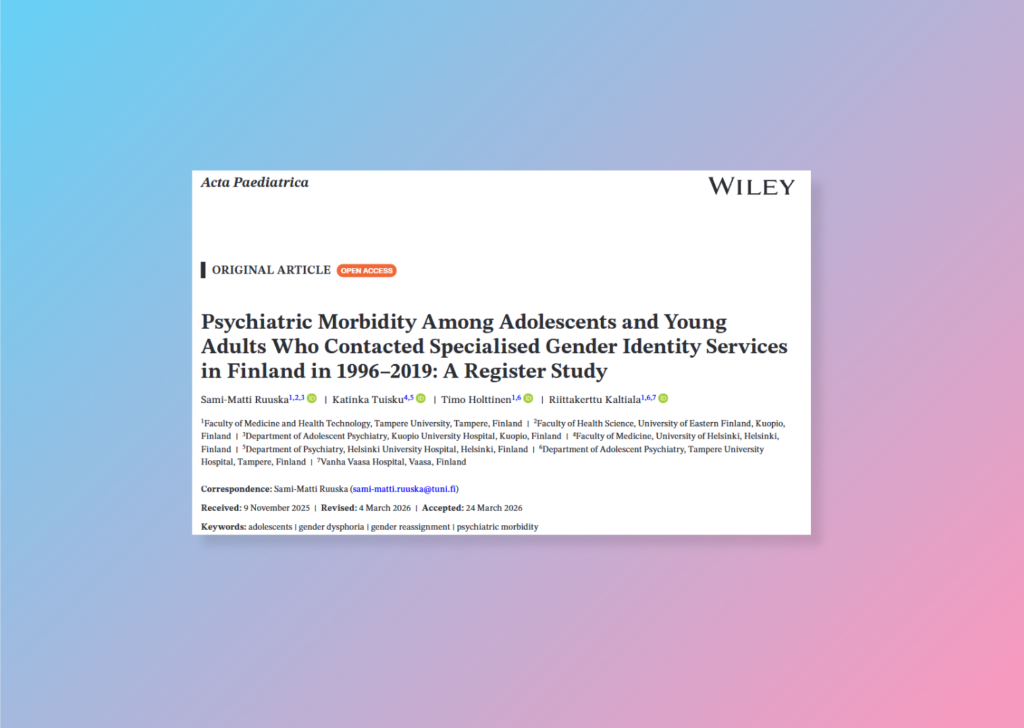
It Is False to Say That Medical Transitions Worsen Young People’s Mental Health
On the pseudoscientific exploitation of a study
Read more
Webinar “A Trans-Skeptical Parenthood” on July 2 at 6:30 p.m.
Trans Youth Trajectories webinar
Read more
2.2% of young people in France are trans or non-binary
Findings from a nationally representative survey
Read more