


In a study published in the Journal of Adolescent Health, Natalie Wittlin and colleagues from Princeton University explore the mental health of transgender adolescents who made a “binary” social transition in childhood and who experienced little or no endogenous puberty before beginning medical gender-affirming care. The study focuses on a sample of trans youth who were able to benefit from puberty blockers and hormone treatments, and examines their mental health trajectories over the different stages of their medical transition (before blockers and hormones; after blockers and before hormones; after hormones and before surgery). It compares their levels of anxiety and depression symptoms with those of their cisgender peers. To measure symptom presence, the study used questionnaires completed by the adolescents themselves and by their parents.
The researchers conducted a prospective longitudinal study with a control group, involving 183 transgender youth from the United States and Canada whose parents supported their social transition from an early age. Through the use of puberty blockers, these youth were able to avoid an undesired endogenous puberty, and many went on to initiate puberty aligned with their affirmed gender through hormone therapy. The study’s results indicate that these transgender youth showed relatively low and stable levels of internalizing symptoms of psychological distress over time and throughout their medical transition, although the parents of trans girls (but not the girls themselves) reported noticing depressive symptoms in their children that increased and then decreased over time.
The results show a notable difference between the mental health trajectories of transgender adolescents and those of their cisgender peers. Cisgender girls, for example, reported increases in anxiety symptoms with age, while cisgender boys showed a decrease in self-reported anxiety. In contrast, transgender adolescents generally maintained similar levels of anxiety and depression over time, typically falling between the levels reported by cisgender boys and cisgender girls.
The study highlights the protective role of gender-affirming medical care, allowing transgender youth to go through adolescence without the typical increases in psychological distress often observed among transgender youth who do not have access to such care. By beginning their medical transition at the time of puberty, these adolescents were able to experience bodily changes aligned with their gender identity, which appears to limit the development of symptoms of anxiety and depression.
The authors also emphasize the importance of family support in the positive mental health trajectories of the transgender youth studied. The adolescents in the study benefited from a supportive social environment, which facilitated their social transition and, in turn, improved their mental health. This support, combined with gender-affirming medical care, may help explain the stability of their emotional well-being during this complex period.
In their conclusions, Wittlin and collaborators note that the observed stable mental health trajectories are meaningful given the challenges frequently faced by trans adolescents, such as discrimination and invalidation. The study shows that with family support and access to gender-affirming care, trans young people can maintain good mental health throughout adolescence.
The authors also encourage future research to further explore positive experiences of medical transition, including measures of wellbeing such as quality of life and overall satisfaction, which could provide a more comprehensive picture of the impact of gender-affirming care on supported trans youth.
Finally, to access the full study, click here.
More news

The Netherlands strengthens its gender-affirming care model for trans minors
The evidence supports gender-affirming care
Read more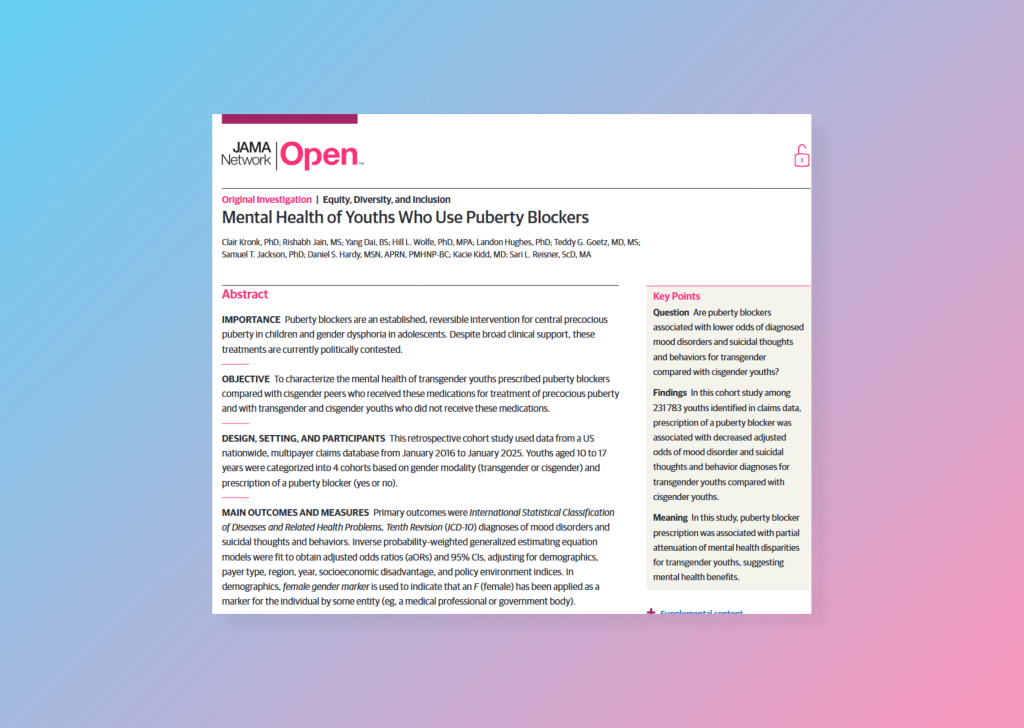
Puberty Blockers and Suicidality: New Study of 230,000 Youths
Lower Suicidality Among Transgender Youths
Read more
Without consent: the scientific misconduct scandal at Norway’s national centre for trans youth
Illegitimate research on trans minors
Read more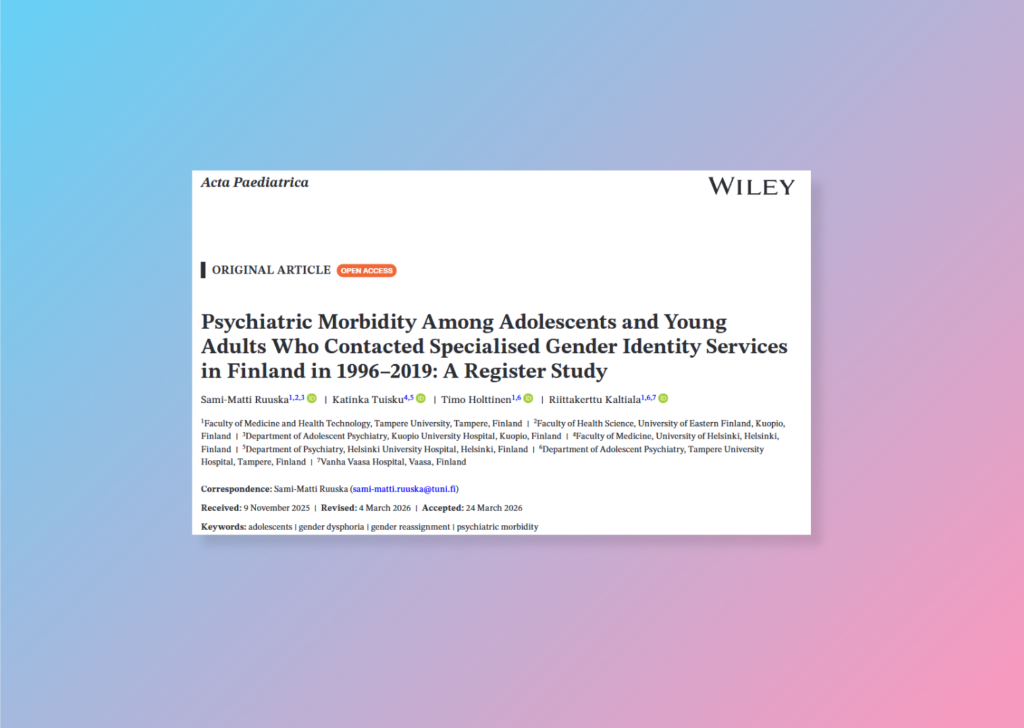
It Is False to Say That Medical Transitions Worsen Young People’s Mental Health
On the pseudoscientific exploitation of a study
Read more
Webinar “A Trans-Skeptical Parenthood” on July 2 at 6:30 p.m.
Trans Youth Trajectories webinar
Read more
2.2% of young people in France are trans or non-binary
Findings from a nationally representative survey
Read more