


Following an initial study mentioned on our site last year, several members ofTrans Youth Trajectories conducted a secondary analysis of the data from the cohort of trans children and adolescents seen in specialized consultation at the Pitié-Salpêtrière Hospital.
This study analysed the data of 239 children and adolescents who consulted the specialized gender diversity clinic at the Pitié-Salpêtrière Hospital in Paris between 2012 and 2022. The consultation, integrated into the Trans Youth Trajectories network, welcomes young people under 18 who are trans or questioning their gender, as well as their families, referred by physicians or associations, or who present spontaneously. The multidisciplinary team provides psychological support, hormone treatments, and sometimes surgical interventions, following the recommendations of the WPATH and the Endocrine Society. Treatment decisions, taken in multidisciplinary concertation, focus on the needs of the patients. All young people who consulted the hospital service before the age of 18 were included in the study.
Sociodemographic and clinical data show a majority of patients assigned female at birth (68 %) compared with those assigned male (32 %), and a younger age at admission for the latter group. About one third of participants presented gender incongruence before puberty, with a higher proportion among those assigned male. Regarding sexual orientation, few participants reported a defined orientation.
Psychiatric data show a high prevalence of mental health disorders among transgender youth, particularly among those assigned female at birth, with high rates of past suicide attempts (29 %), suicidal ideation (53.7 %), depression (65.4 %), and generalized anxiety disorder (45.7 %). Those assigned male at birth showed fewer psychiatric comorbidities than those assigned female at birth, which helps explain why they access the health care system less frequently. Although school bullying was common across all groups, those assigned female at birth experienced a higher rate of school discontinuation (38.3 % vs. 21.6 %).
Choices of social transition also differed: those assigned female were more likely to socially transition within their family and at school than those assigned male, but both groups began their transition at about the same average age (15.13 years). Medical treatments such as puberty blockers and hormones involved a minority of patients (respectively 11 % and 44 %), occurring on average at similar ages across groups (respectively at 13.87 years and 16.87 years), and young trans women were more likely to receive puberty blockers. Interventions such as chest masculinization surgeries remained rare among minors, with such procedures occurring on average around age 18.44 (the youngest was 16).
For the researchers, the study nevertheless has limitations, such as the low socio-economic diversity of the patients and the sample being drawn from a single center, which may limit the generalizability of the results. The increase in the number of transgender youth, particularly those assigned female at birth, highlights the importance of continuing research to refine knowledge about this rapidly evolving population and to understand the factors influencing these life trajectories. Additional studies with longer follow-up periods will be essential to track these trends and better understand the specific needs of these young people.
To access the full study, click here.
More news

The Netherlands strengthens its gender-affirming care model for trans minors
The evidence supports gender-affirming care
Read more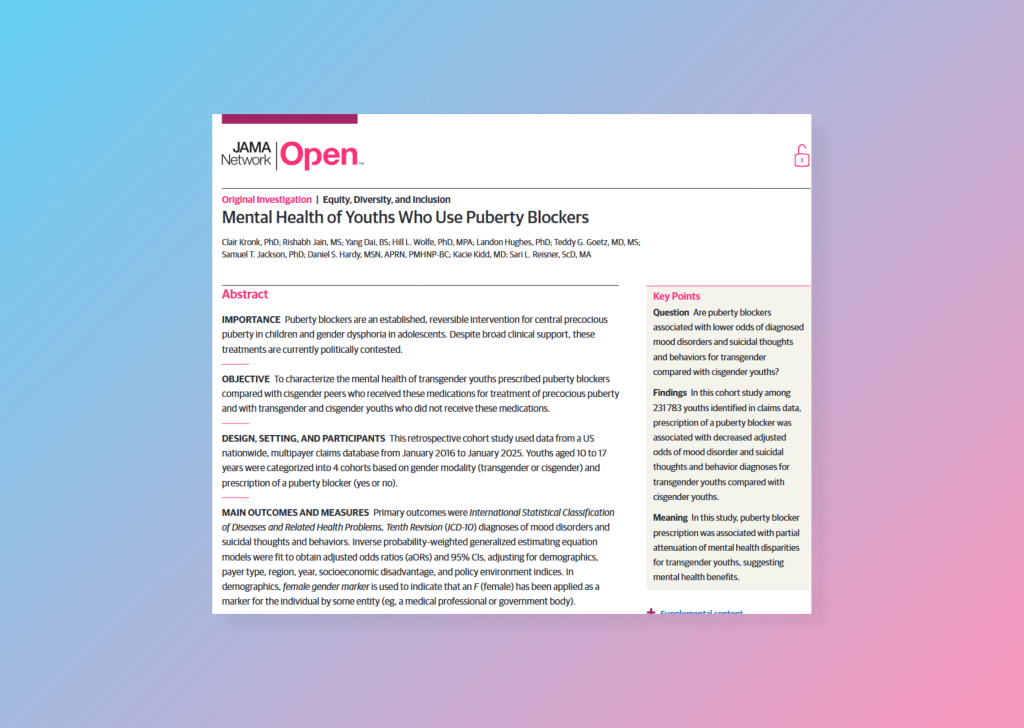
Puberty Blockers and Suicidality: New Study of 230,000 Youths
Lower Suicidality Among Transgender Youths
Read more
Without consent: the scientific misconduct scandal at Norway’s national centre for trans youth
Illegitimate research on trans minors
Read more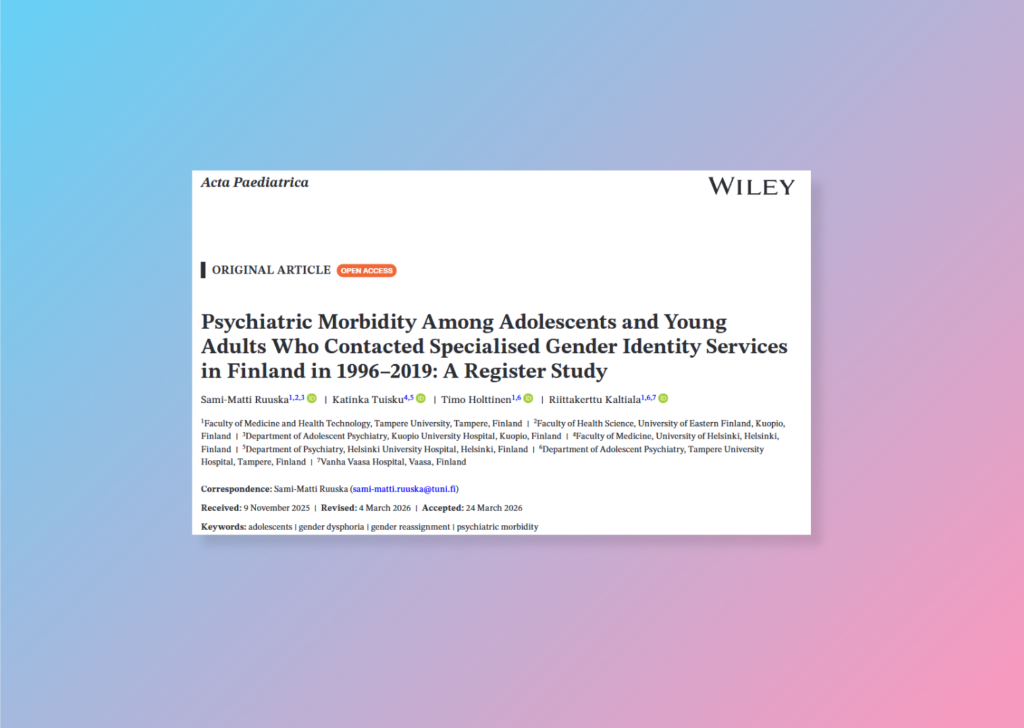
It Is False to Say That Medical Transitions Worsen Young People’s Mental Health
On the pseudoscientific exploitation of a study
Read more
Webinar “A Trans-Skeptical Parenthood” on July 2 at 6:30 p.m.
Trans Youth Trajectories webinar
Read more
2.2% of young people in France are trans or non-binary
Findings from a nationally representative survey
Read more