


In this study co-authored by Annie Pullen Sansfaçon, a member of Trans Youth Trajectories, and colleagues, 20 interviews were conducted with young people aged 16 to 25 who had discontinued a gender transition. The thematic analysis resulted in the identification of three main themes: “non-linear gender modalities,” “navigating sexual modalities alongside gender modalities,” and “coping with dysphoria and bodily discomfort.”
Consistent with previous studies, there is a great diversity of transition and detransition pathways, even though the sample was homogeneous in terms of sex assigned at birth (predominantly female). Cisnormativity – the assumption that those assigned male at birth will grow up to be men and those assigned female at birth will grow up to be women – can also affect the transition process by pushing young people to follow a binary path. According to the authors, trans narratives and life paths may be influenced by cisnormativity in ways that generate a new normative influence they term “transnormativity.” This concept places expectations of conformity and coherence on trans people, which can lead to viewing detransition as an outcome to be avoided. For example, some participants reported feeling pressure to “prove themselves” by reaching certain transition milestones or following a pathway that did not correspond to their authentic and sometimes evolving identity, leading to prolonged transitions. In this context, many participants described their detransition as a liberation from gender norms.
Sexual modalities are diverse and fluid. Exploration of sexual orientation and identity led participants to question gender prior to their transition. For some participants, attraction to people of the same gender sometimes seemed inconceivable or was associated with gender non-conformity. After transition, some participants felt discomfort when perceived as cisgender and heterosexual.
The authors finally note several possible outcomes following detransition in terms of bodily experiences: a sense of relative bodily comfort; the resurgence of pre-transition gender dysphoria; and the development of a form of “reverse dysphoria” emerging from the bodily changes of the transition and persisting beyond detransition.
Supporting these findings, the authors recommend, in particular, discussing and deconstructing heteronormative and cisnormative assumptions as early as possible with gender-creative children in order to normalize diverse sexual and gender modalities and to prevent internalized homophobia. These interventions should remain non-coercive: young people should not be required to discuss these topics in order to access gender-affirming care.
To read the full study, click here
More news

The Netherlands strengthens its gender-affirming care model for trans minors
The evidence supports gender-affirming care
Read more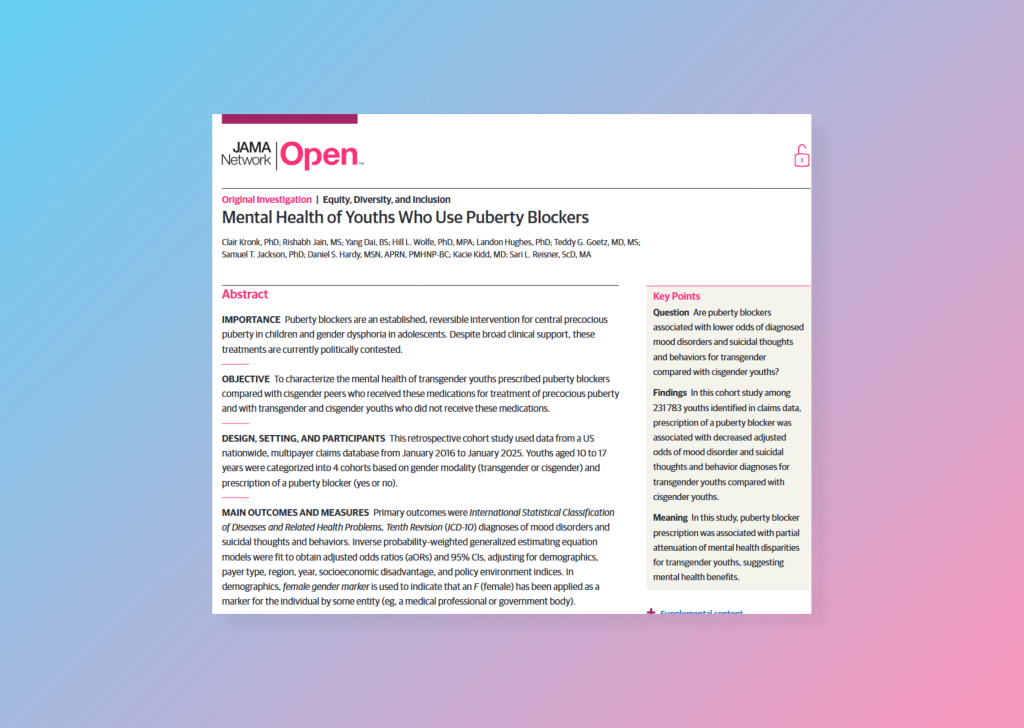
Puberty Blockers and Suicidality: New Study of 230,000 Youths
Lower Suicidality Among Transgender Youths
Read more
Without consent: the scientific misconduct scandal at Norway’s national centre for trans youth
Illegitimate research on trans minors
Read more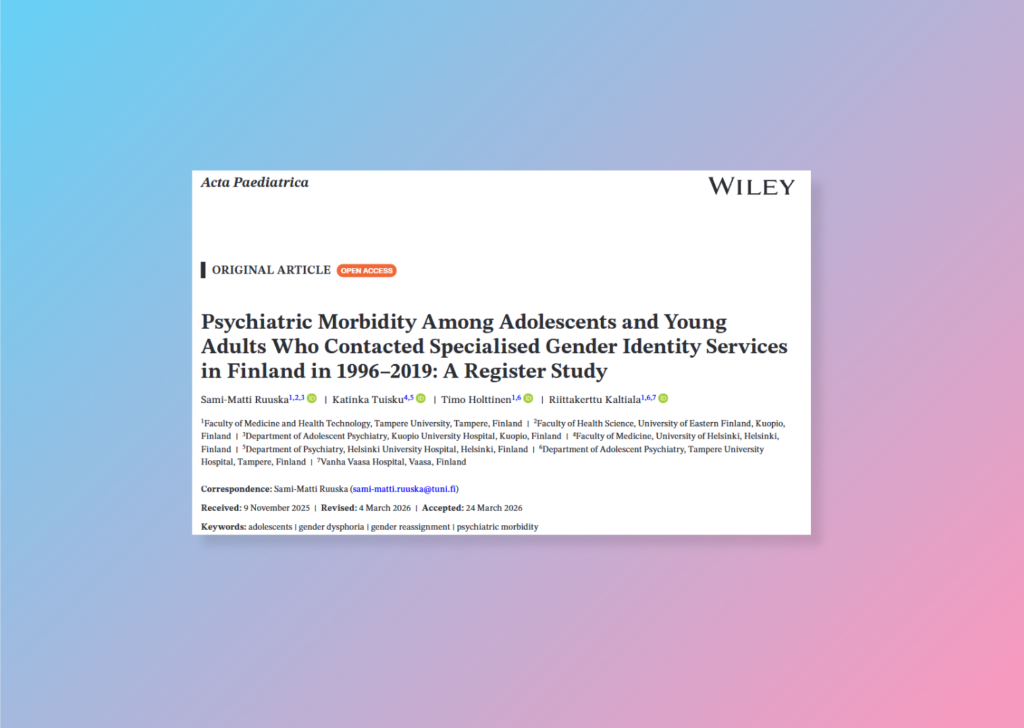
It Is False to Say That Medical Transitions Worsen Young People’s Mental Health
On the pseudoscientific exploitation of a study
Read more
Webinar “A Trans-Skeptical Parenthood” on July 2 at 6:30 p.m.
Trans Youth Trajectories webinar
Read more
2.2% of young people in France are trans or non-binary
Findings from a nationally representative survey
Read more