


The French Defender of Rights, Claire Hédon, published on 16 June 2025 a dense and ambitious framework decision dedicated to respect for the gender identity of trans people. Among the many areas addressed, particular attention is paid to the situation of trans minors, who face specific obstacles in the recognition and affirmation of their gender. The Defender of Rights deplores the persistent shortcomings of the French legal framework and calls for clear legislative developments to ensure better protection for these young people.
Civil status
With regard to civil status, the Defender of Rights recalls that forms of address (“Madame”, “Monsieur”) are not elements of civil status, and that referring to the form of address corresponding to a person’s sex assigned at birth rather than to that associated with their gender identity “may constitute discriminatory harassment based on sex and gender identity within the meaning of Law No. 2008-496 of 27 May 2008.” She therefore recommends using the form of address chosen by the person, using their customary pronouns (Recommendation 1), and “decoupling, within information systems, forms of address from the social security number and from the sex marker” (Recommendation 2). These recommendations also apply to situations involving trans minors, who are systematically misgendered and assigned their sex assigned at birth in certain healthcare settings, under the guise of compliance with identity-vigilance requirements, without regard to the discriminatory harassment constituted by such practices.
Regarding the change of sex marker on civil status records for non-emancipated minors, current law does not provide for this possibility. However, the January 2022 decision of the Chambéry Court of Appeal, which relied on the right to respect for private life enshrined in Article 8 of the European Convention on Human Rights to authorise a change of sex marker for a non-emancipated minor, established a precedent. Drawing on this case law, and on the example of other countries that allow trans minors to change their sex marker on civil status records, the Defender of Rights recommends opening this possibility through judicial proceedings and with parental support (Recommendation 6).
Health
The Defender of Rights draws on a recent 2024 INSERM survey to estimate the demographics of trans youth. According to this survey, “nearly 2.3 % of people aged 18-89 report having already thought about changing gender, but this figure rises to nearly 6 % among 18-29-year-olds.” While this proportion appears relatively high among young people, the Defender stresses the need to temper assumptions about trans-specific healthcare needs across the whole population: “among people aged 18 to 89 who identify as transgender, only a small minority engage in a medical transition, since one person in a thousand (0.1 % of the population) reports having undertaken steps to change gender.” More specifically, within the minor population, figures reported by the French Society of Paediatric Endocrinology and Diabetology (SFEDP) indicate that “out of nearly 1,600 trans youth seen by endocrinologists in France over a ten-year period, 50 % received no medical treatment.” It should be noted that this latter figure is likely affected by selection bias, as young people seen in paediatric endocrinology consultations have not only already been diagnosed with “gender incongruence” by a mental health specialist prior to referral, but are also very likely seeking gender-affirming care – otherwise they would not have been referred to endocrinology. This 50 % figure therefore represents a very high estimate of medicalisation within the trans population as a whole and should be distinguished from the 0.1 % reported in the INSERM survey.
With regard to access to care, the Defender of Rights confirms the recent evolution in the position of the French National Health Insurance (Assurance Maladie). In March 2024, it informed its local health insurance funds and hospitals that “financial coverage of gender-affirming chest and pelvic surgeries is no longer subject to prior authorisation for people aged over 16 and must be processed directly by the primary health insurance funds, as provided for in the Common Classification of Medical Procedures.” The Defender of Rights nonetheless recalls that “the gender-affirming surgeries available to minors are limited exclusively to mastectomies/chest reconstruction,” with pelvic surgeries only permitted once legal adulthood is reached.
The framework decision reiterates the recommendations of the French Society of Paediatric Endocrinology and Diabetology (SFEDP), summarised on our website here, recalling that the care of trans minors involves “the need to balance the young person’s best interests and their autonomy, while taking into account the complexity of hormone treatments and their long-term effects.” On this point, the Defender of Rights emphasises that “while the side effects of hormone treatments must be taken into account, the available studies demonstrate the positive impact of puberty blockers and other hormone treatments on mental health, social integration and quality of life for transgender people.” She adds: “The scientific literature thus shows that the risk associated with delayed treatment is far greater than that associated with providing treatment. SFEDP experts demonstrate that not providing medical treatment to trans youth has an impact on their psychological distress, is associated with an increase in suicide attempts, and leads to an impairment of psycho-affective and cognitive development.”
Still with regard to trans-specific healthcare for trans minors, the Defender of Rights highlights unfounded medical barriers: “Barriers to access to transition-related care are often justified by fears of regret or ‘detransition’. This phenomenon, which consists of stopping a transition process and living again according to one’s sex assigned at birth, nevertheless remains very marginal (less than 1 % of people who have initiated a medical transition according to a British study). Data reporting high rates of detransition come from studies conducted abroad that include clinics practising ‘conversion therapies’, which does not allow their validity to be established. Several recent studies show that trans youth often think at length before initiating treatment, understand its effects and risks, and are competent to make an informed decision.”
Furthermore, the framework decision states: “The risks of regret are also minimised by the total or partial reversibility of medical transition treatments. Puberty blockers have long been used in children with precocious puberty, and the scientific literature has attested for nearly 40 years to the reversible nature of their effects, with a physiological resumption of puberty upon discontinuation.”
On the basis of the full body of medical evidence, the Defender of Rights “calls for the establishment of a national protocol on gender transition pathways for minors under the age of 16, in collaboration with user associations, and within a reasonable timeframe, drawing in particular on the recommendations issued by the French Society of Paediatric Endocrinology and Diabetology.” (Recommendation 16)
Sexual and reproductive rights
The Defender of Rights highlights the birth of a child through medically assisted reproduction (MAR) to a couple of two women, one of whom is trans: “At the Department of Reproductive Medicine and Biology of the Nantes University Hospital, a couple composed of a cisgender woman and a transgender woman benefited from MAR using previously cryopreserved sperm from the transgender woman. The multidisciplinary team approved the case in light of the administrative, medical, psychological and ethical elements, which were considered compliant with the 2021 bioethics law. Following this MAR procedure, a child was born in February 2024. The couple had signed an early joint parentage recognition (RCA) before a notary at the beginning of 2023 in order to secure the filiation of the transgender woman.”
It is therefore important to inform transfeminine youth and their families about the possibilities offered by the current medico-legal framework, which allows not only gamete cryopreservation prior to hormone therapy, but also their possible later use in a MAR procedure.
Nevertheless, the Defender of Rights points out the insufficiencies of the current legal framework and recommends “amending legislative and regulatory texts governing access to reproductive rights in order to allow access to MAR for all persons, regardless of their gender identity and gender marker on civil status records. To this end, gender markers should be removed from the legal texts and a single legal and regulatory framework should be established, applicable to both transgender and cisgender people, granting the right to gamete preservation and use, and to MAR, independently of sex listed on civil status records.” (Recommendation 22)
Schooling
The Defender of Rights welcomes the publication in 2021 of the so-called “Blanquer” circular, which sets out conditions to facilitate social transition for trans students, provided that both parents give their consent. While she acknowledges that “many civil society actors regret that the circular requires the agreement of both parents, as they regularly observe situations of disagreement between parents of transgender minors that block recognition of the young person’s gender identity in the school setting”, and while French law allows one parent alone to make ‘routine’ decisions, particularly regarding schooling, she nonetheless rules out the idea that supporting a child’s social transition at school could be considered a “routine” act. Both parents must therefore be involved in this decision.
She recalls the existing regulatory framework and recommends its application, notably where it provides that schools facilitate mediation in cases of disagreement regarding support for a social transition within the institution (Recommendation 25). She also recalls the legal framework applicable when such mediation fails: “avenues of legal recourse exist, and the family court judge (JAF) may be seized, either by the parents themselves in the event of disagreement, or by a third party who considers that the refusal expressed by one or both parents is contrary to the child’s best interests, and who may then refer the matter to the public prosecutor for possible referral to the JAF (Article 373-2-8 of the Civil Code). Furthermore, if the situation presents a risk of danger to the minor, a report of concern may be filed.”
These reports of concern or notifications of children at risk are the subject of a dedicated section in the framework decision, which notes in particular that “the implementation [of child protection] is often limited by the way situations are assessed, by professionals who are insufficiently trained and likely to hold biases or stereotypes about LGBTI youth, or who consider that gender identity and sexual orientation fall within the young person’s private life and therefore hesitate to address the issue.” This is all the more problematic given that acceptance of trans identity can be difficult within families: “a 2020 study reports that 60 % of trans youth experience intrafamilial violence.” The text cites as examples the “Blanquer” circular as well as “the guide published in 2024 by the Paris department” (available here), and recommends that “the General Directorate for Social Cohesion develop and disseminate tools to departments to support child protection professionals in taking into account the trans identity of minors.” (Recommendation 30)
With regard to the use of dormitories, the Defender of Rights warns against an abusive interpretation of the provisions of the so-called “Blanquer” circular: “Some institutions ask for parental consent for their child to sleep with a trans child, thereby risking exposing the student to hostile behaviour. In this context, the Defender of Rights recalls the importance of respecting the privacy of transgender students and, moreover, the need to raise awareness within the group in order to prevent any situation of school bullying in these spaces where all students, and especially transgender youth, feel more vulnerable, as recalled by the circular.”
A recurring issue concerns school trips or summer camps: “The Defender of Rights observes that accommodation managers rely on Article R. 227-6 of the Code of Social Action and Families, which states that ‘residential stays […] must be organised in such a way as to allow girls and boys over the age of six to sleep in separate places. Each hosted minor must have an individual sleeping arrangement,’ by taking into account the child’s legal sex rather than their gender identity.” In this respect, the Defender of Rights clarifies that this legal provision does not specify that sleeping arrangements must be organised according to sex assigned at birth rather than the child’s gender identity, and therefore considers “that the provisions of Article R. 227-6 of the Code of Social Action and Families do not prohibit organisers of holiday stays for minors from allowing trans children to sleep in dormitories with children whose gender corresponds to the one with which they identify. Indeed, the terms ‘girls’ and ‘boys’ may be interpreted with regard to the gender identity of the children concerned rather than their sex as recorded on civil status documents.” (Recommendation 26)
Higher education
Regretting that the gender identity of trans students is regularly denied in higher education, the framework decision issues several recommendations: one relating to gender affirmation for trans students (Recommendation 32); another concerning the removal of forms of address from diplomas and all academic documents without making this conditional on a change of sex marker on civil status records (Recommendation 35); and a further recommendation (Recommendation 36) concerning the reissuance of all official documents (transcripts, diplomas, etc.).
Sport
The Defender of Rights notes that “physical education classes at school and sports practice more generally, marked by male dominance, are spaces where issues related to relations between girls and boys and gender stereotypes are particularly exacerbated. As a result, many trans youth are exempted from physical education (PE) classes, insofar as this subject remains highly gendered and binary, with different assessment criteria depending on sex assigned at birth. Some PE teachers even go so far as to request medical information about a child’s possible hormone treatment in order to adjust grading criteria.”
In response to this situation, the Defender of Rights recommends “strengthening mixed-gender participation in physical and sporting activities at school and promoting mixed practice of sport in both amateur and professional contexts, while combating gender stereotypes and sexism in sport and paying particular attention to the full participation of girls.” (Recommendation 38) She notably cites examples of mixed practice and competition in certain disciplines such as archery, equestrian sports, mixed doubles in tennis, badminton, table tennis, mixed relays in swimming, athletics, biathlon, and others.
In sum, this framework decision constitutes a strong signal, even a direct call to lawmakers and institutions. Trans minors, long rendered invisible or neglected by public policies, must now be fully recognised in their rights. Respect for their gender identity, far from being a concession, is a legal, ethical and social obligation. At a time when debates on trans identity are intensifying in the public sphere, the Defender of Rights chooses to place minors at the centre of the law, recognising their capacity to state who they are and to be respected in this self-determination.
To access the full framework decision, click here.
More news

The Netherlands strengthens its gender-affirming care model for trans minors
The evidence supports gender-affirming care
Read more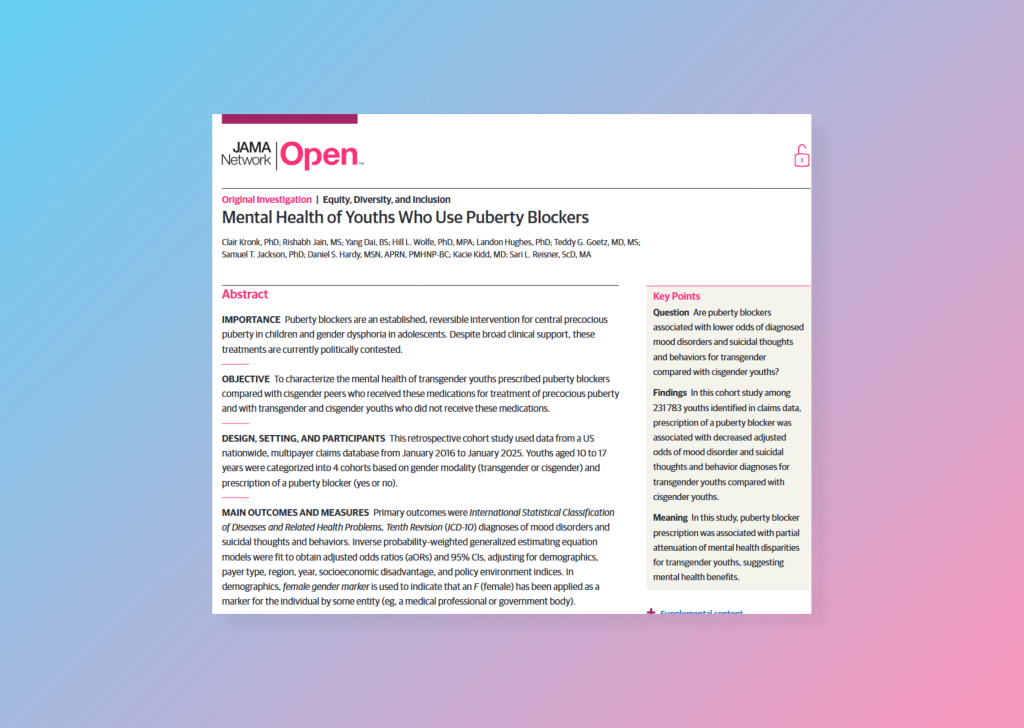
Puberty Blockers and Suicidality: New Study of 230,000 Youths
Lower Suicidality Among Transgender Youths
Read more
Without consent: the scientific misconduct scandal at Norway’s national centre for trans youth
Illegitimate research on trans minors
Read more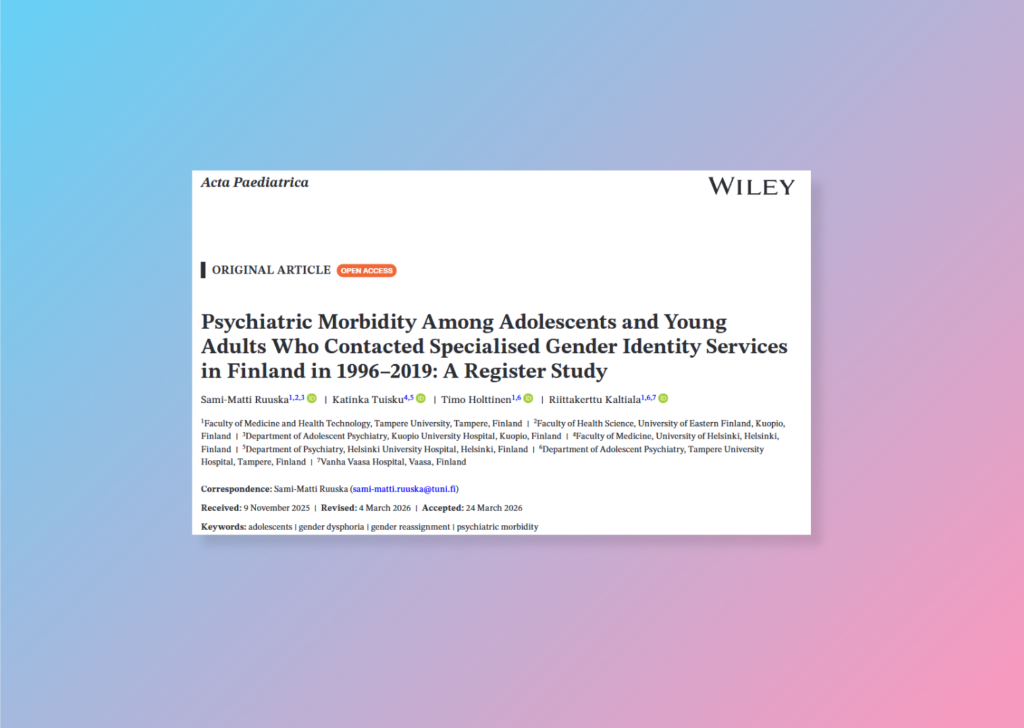
It Is False to Say That Medical Transitions Worsen Young People’s Mental Health
On the pseudoscientific exploitation of a study
Read more
Webinar “A Trans-Skeptical Parenthood” on July 2 at 6:30 p.m.
Trans Youth Trajectories webinar
Read more
2.2% of young people in France are trans or non-binary
Findings from a nationally representative survey
Read more