


We mentioned it to you recently, a new study by Dr Kristina Olson and colleagues from Princeton University, now published in JAMA Pediatrics, examines the long-term experiences of trans youth 6 to 10 years after their transition. The results show that these young people, who began transition at an early age, are very satisfied with their care and very few regret it. This study uses innovative methods to avoid loss to follow-up, which has often been criticised for potentially hiding large amounts of regret.
The study, which recruited participants between 2013 and 2017, followed 317 young people who were 3 to 12 years old at the start of care and had already socially transitioned. Of these 317 young people, over the years, 269 received gender-affirming care (puberty blockers and/or hormones). Among these, in 2023, 220 participants – the young people themselves or their parents – responded to a survey revealing high satisfaction rates among the youth (and similarly among parents): 6.38 points out of 7 for puberty blockers and 6.67 points for hormones. 94 % of the young people reported that puberty blockers were prescribed at the right time (on average at age 11), and many would have preferred them even earlier; 96 % said hormones were prescribed at the right time (on average at age 13), with similar preferences reported by parents.
In addition, treatment discontinuation rates were very low, with only 3 % of participants having stopped their gender-affirming care. The regret rate for either form of care was 4 % (9 young people), half of whom continued care anyway (5 young people). The researchers also showed that the discontinuation rates among those who did not respond to the surveys (n = 49) were similar to those of respondents, countering arguments that non-responses might reflect widespread negative experiences.
Finally, this study fits within a broader trend of long-term research showing that desistance or detransition rates are very low among trans youth. Similar studies conducted in Australia, the United States, and the Netherlands confirm these results. These studies show that arguments calling for longer follow-up periods or for restrictions on care for trans youth lack solid foundations. Evidence continues to accumulate in favour of the benefits of gender-affirming care, while other studies demonstrate the devastating impact of anti-trans laws on young people’s mental health.
To read the full study, click here.
More news

The Netherlands strengthens its gender-affirming care model for trans minors
The evidence supports gender-affirming care
Read more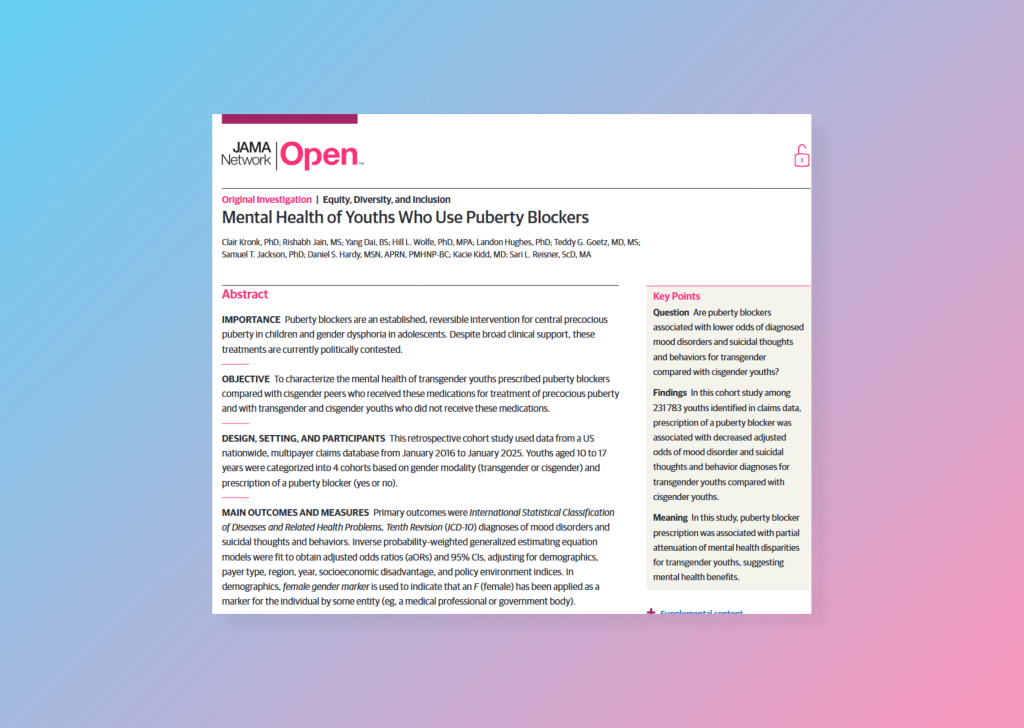
Puberty Blockers and Suicidality: New Study of 230,000 Youths
Lower Suicidality Among Transgender Youths
Read more
Without consent: the scientific misconduct scandal at Norway’s national centre for trans youth
Illegitimate research on trans minors
Read more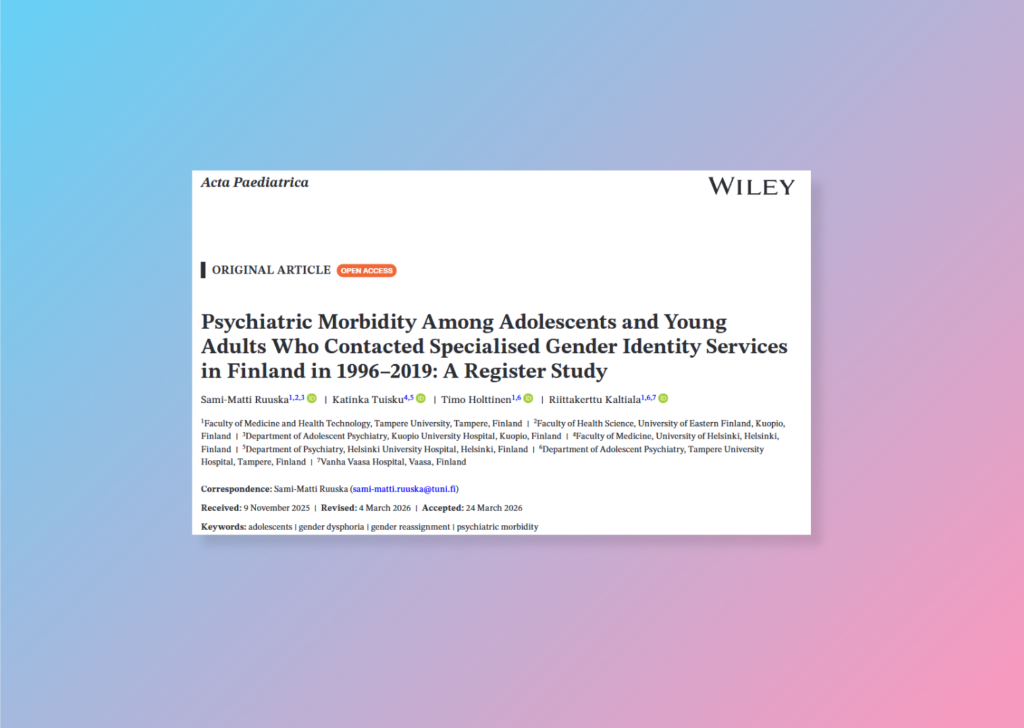
It Is False to Say That Medical Transitions Worsen Young People’s Mental Health
On the pseudoscientific exploitation of a study
Read more
Webinar “A Trans-Skeptical Parenthood” on July 2 at 6:30 p.m.
Trans Youth Trajectories webinar
Read more
2.2% of young people in France are trans or non-binary
Findings from a nationally representative survey
Read more