


In an article published in the journal Psychology of Sexual Orientation and Gender Diversity, Florence Ashley, a transfeminine legal scholar and bioethicist and member of Trans Youth Trajectories, and her co-authors discuss the validity of gender assessments that are generally required prior to hormone therapy or surgery.
These assessments are intended to minimize the risk of regret that some people may feel after medical transition when they re-identify with the gender they were assigned at birth. The authors review several methods of assessment used: the diagnostic criteria of the DSM-5, the person’s gender history, standard questionnaires, and regret correlates. They report that these assessment methods rely on sexist stereotypes and arbitrary or unfounded considerations, and are not sufficient to predict future regret more effectively than informed consent models.
Drawing on data from clinics that use informed consent models – which do not show higher rates of regret – the authors conclude that gender assessment models are not suited to reducing future regret, and advocate for the broader adoption of the informed consent model, which focuses on listening to self-declared gender identity and stated transition goals and helps develop patients’ capacity to make free and informed decisions.
To read this article, click here.
More news

The Netherlands strengthens its gender-affirming care model for trans minors
The evidence supports gender-affirming care
Read more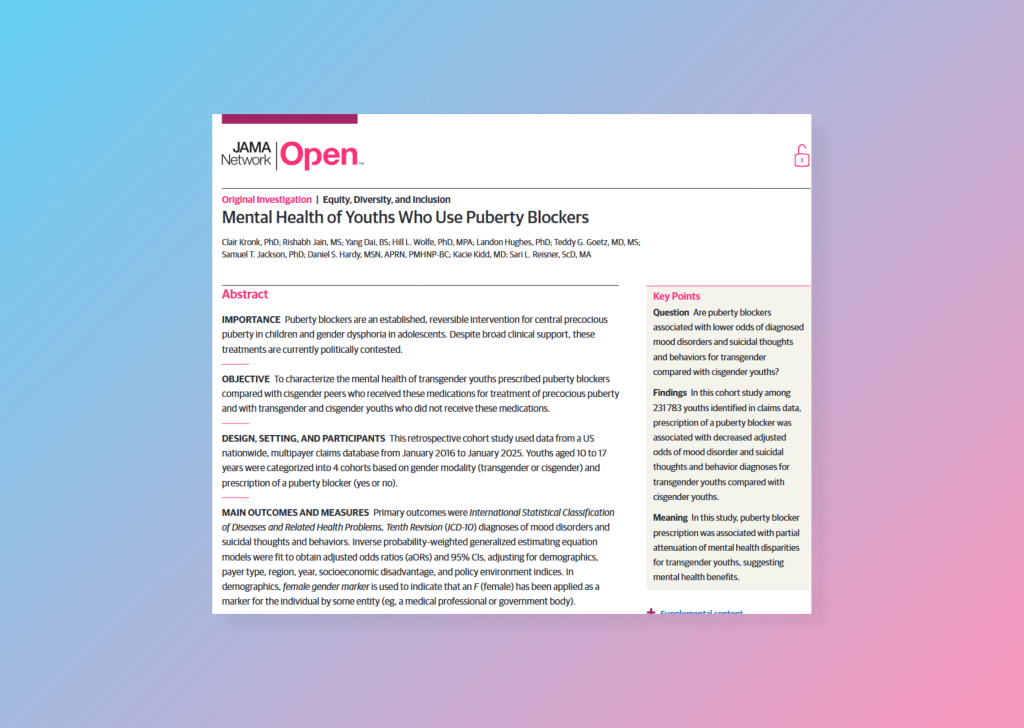
Puberty Blockers and Suicidality: New Study of 230,000 Youths
Lower Suicidality Among Transgender Youths
Read more
Without consent: the scientific misconduct scandal at Norway’s national centre for trans youth
Illegitimate research on trans minors
Read more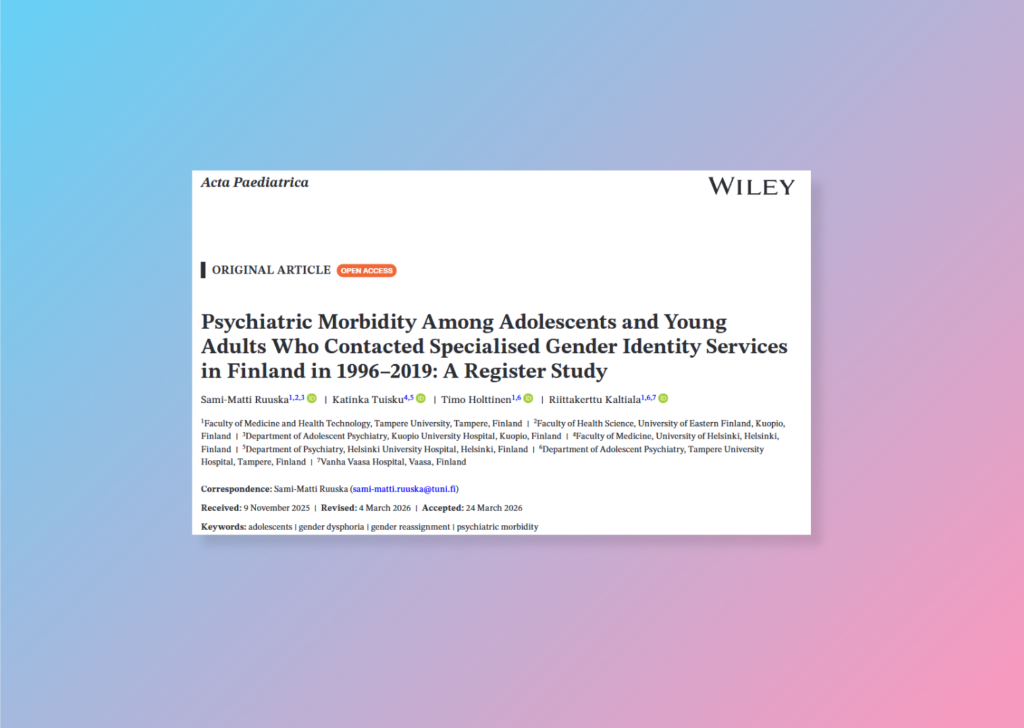
It Is False to Say That Medical Transitions Worsen Young People’s Mental Health
On the pseudoscientific exploitation of a study
Read more
Webinar “A Trans-Skeptical Parenthood” on July 2 at 6:30 p.m.
Trans Youth Trajectories webinar
Read more
2.2% of young people in France are trans or non-binary
Findings from a nationally representative survey
Read more