


A retrospective study conducted with 1 050 trans young people who started hormone therapy in a specialized pediatric clinic between 2007 and 2022 examined the rates and reasons for discontinuation of gender-affirming hormones, over follow-up periods ranging from 0.8 to 11.2 years (median: 2.7 years). The analysis, led by Elizabeth Boskey and her colleagues from Harvard, shows that 93 % of participants were still using these treatments at the last follow-up, 2 % had temporarily stopped before resuming, and 4 % had stopped definitively. 0.5 % stopped hormones because of re-identifying with the gender associated with their sex assigned at birth (detransition). These results show that detransitions are rare and that the majority of discontinuations are related to reasons other than gender identity, such as achieving personal goals or logistical obstacles.
The reasons for discontinuing treatment are varied. Most people who stopped hormone therapy did so because they had reached their goals in terms of gender expression or embodiment, for example by achieving lasting physical changes that no longer required ongoing treatment. Other reasons include difficulties related to access to medication, such as cost or administrative complexity, as well as concerns about side effects. In some cases, practical constraints, such as the need for weekly injections, also contributed to discontinuation.
The study highlights that transgender youth with complex psychiatric histories, such as suicidal ideation, hospitalizations, or diagnoses of anxiety disorders, have a slightly higher likelihood of discontinuing hormone therapy. However, these interruptions generally do not reflect a questioning of their gender identity, but rather challenges related to access to care or personal factors. By contrast, other psychiatric conditions, such as autism or obsessive-compulsive disorder, were not associated with an increased likelihood of discontinuation, indicating that these diagnoses should not limit access to hormonal treatment.
The physical effects of treatment, such as the virilization induced by testosterone (increased body hair, deeper voice), can be permanent. According to the authors, this explains why some individuals choose to stop hormone therapy after achieving their physical goals, without questioning their transgender identity. These discontinuations, motivated by satisfaction with the results obtained, contrast with media narratives that often associate stopping treatment with regret or detransition.
The researchers highlight systemic barriers that contribute to treatment discontinuation. Individuals covered by Medicaid or from socio-economically disadvantaged backgrounds are particularly vulnerable to loss of follow-up, often due to financial or administrative difficulties. These barriers underscore the importance of improving access to gender-affirming care in order to ensure continuous and appropriate medical follow-up.
The data analysis indicates that the vast majority of transgender youth continue their hormone treatments into adulthood. Temporary or permanent interruptions are mainly driven by practical or personal reasons, rather than by regret related to their transition. These findings call for better recognition of the diverse needs of transgender people, while refuting restrictive arguments based on isolated cases of detransition.
The scientific literature reviewed in this article confirms the significant benefits of gender-affirming care for the mental health and well-being of transgender individuals, while emphasizing that cases of regret or detransition remain extremely rare. Studies conducted in different contexts, notably in the United States and Europe, show that most interruptions of hormone treatment are temporary or related to external factors, rather than to a questioning of gender identity. These findings call for reframing debates on gender-affirming care within an evidence-based perspective, recognizing the positive effects for the majority of patients while working to reduce barriers to access.
To read the study in English, click here.
More news

The Netherlands strengthens its gender-affirming care model for trans minors
The evidence supports gender-affirming care
Read more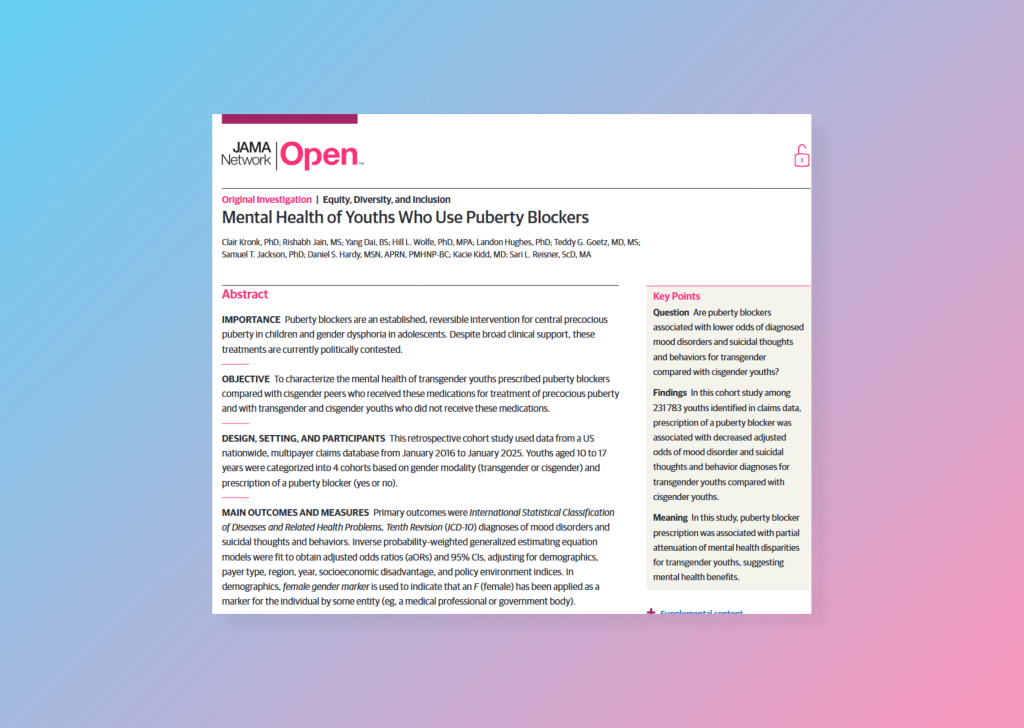
Puberty Blockers and Suicidality: New Study of 230,000 Youths
Lower Suicidality Among Transgender Youths
Read more
Without consent: the scientific misconduct scandal at Norway’s national centre for trans youth
Illegitimate research on trans minors
Read more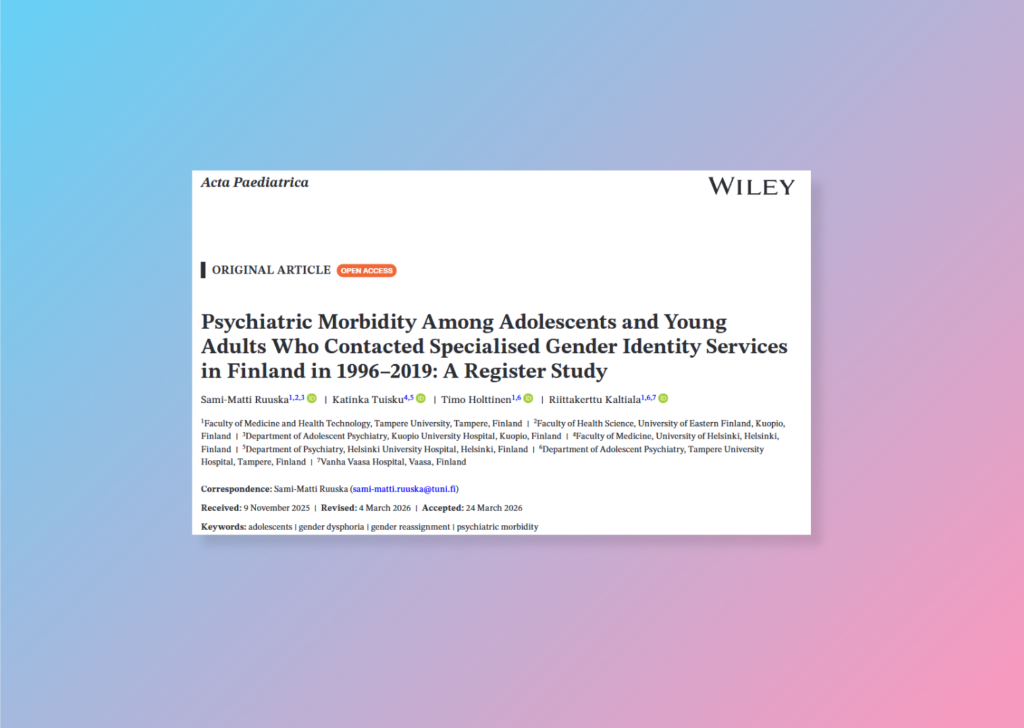
It Is False to Say That Medical Transitions Worsen Young People’s Mental Health
On the pseudoscientific exploitation of a study
Read more
Webinar “A Trans-Skeptical Parenthood” on July 2 at 6:30 p.m.
Trans Youth Trajectories webinar
Read more
2.2% of young people in France are trans or non-binary
Findings from a nationally representative survey
Read more