


In a study published in Neuropsychiatrie de l’enfance et de l’adolescence in June 2023, researchers Lagrange and colleagues revisit the figures from the specialized support consultation for trans youth at the Pitié-Salpêtrière Hospital.
Among a population followed since 2012 of 239 young people aged 3 to 20 years, the results indicate an average age at first appointment of 14.5 years. No increase of an “epidemic” nature was observed. One third of the 218 young people meeting the criteria for gender incongruence (ICD-11) had expressed this incongruence before puberty. Two thirds of the young people seen were assigned female at birth, echoing a trend observed in foreign hospital centers. Among those under 12 years old, the proportion was reversed, with two thirds assigned male at birth. Social transitions had already been carried out before the first consultation in 40 % of cases. Among the 239 young people supported, only one suspended their transition.
Co-occurring psychiatric disorders (28 % with a history of psychiatric hospitalization) were dominated by depression (60 % before care) and suicidal behaviours (46 % with a history of suicidality, 24 % with prior suicide attempts), all in a social context strongly marked by discrimination, insults, harassment, violence, and school rejection. A quarter of the young people were out of school for at least three months at the first appointment, and nearly all (97 %) were able to return to school during follow-up care. Attention-deficit/hyperactivity traits were present in 6 % of the young people; autistic traits were observed in 9 %; and anorexia nervosa in 7 %.
Regarding trans-specific care, these interventions were far from systematic. Puberty blockers, indicated only for adolescents, were prescribed to 26 young people (11 %), with a mean age of 13.9 years, after an average delay of 10 months following the first consultation. Hormonal transitions, whether feminizing or masculinizing, involved 105 young people (44 %), at an average age of 16.9 years, after a delay of 14 months. Chest masculinization surgeries were performed for 30 young people (20 % of the transmasculine individuals) at an average age of 18.4 years. No genital surgery was performed before the age of majority.
The Pitié-Salpêtrière consultation is distinguished from other European clinics by a lower rate of hormonal transitions, possibly linked to a greater emphasis on dialogue within the Parisian care system, potentially broadening the range of care options offered to young people.
More news

The Netherlands strengthens its gender-affirming care model for trans minors
The evidence supports gender-affirming care
Read more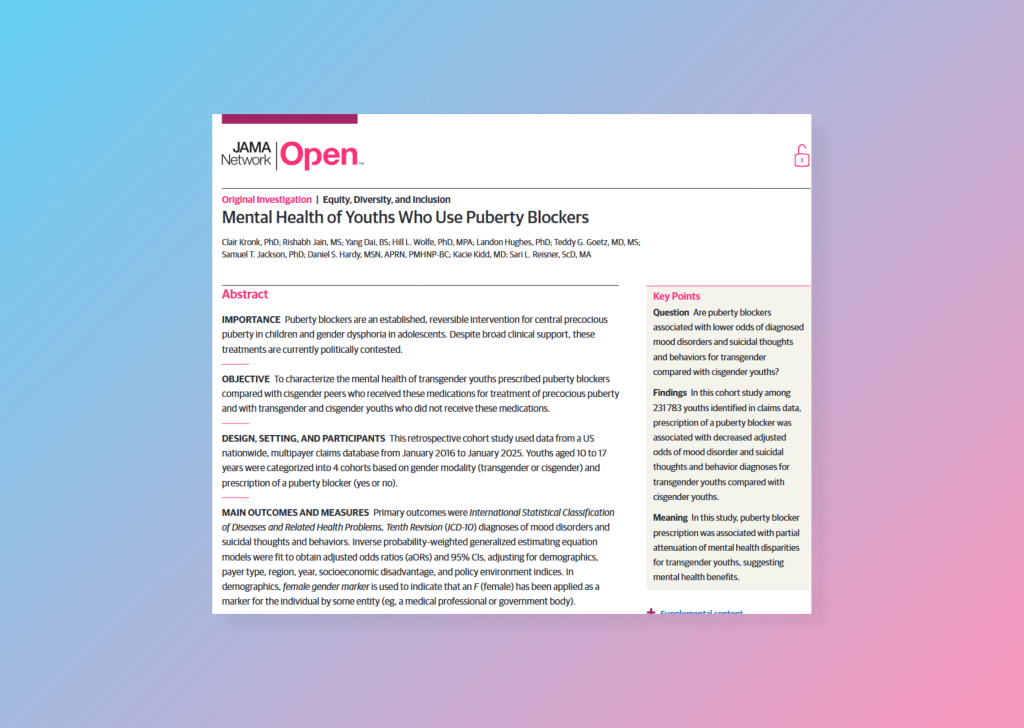
Puberty Blockers and Suicidality: New Study of 230,000 Youths
Lower Suicidality Among Transgender Youths
Read more
Without consent: the scientific misconduct scandal at Norway’s national centre for trans youth
Illegitimate research on trans minors
Read more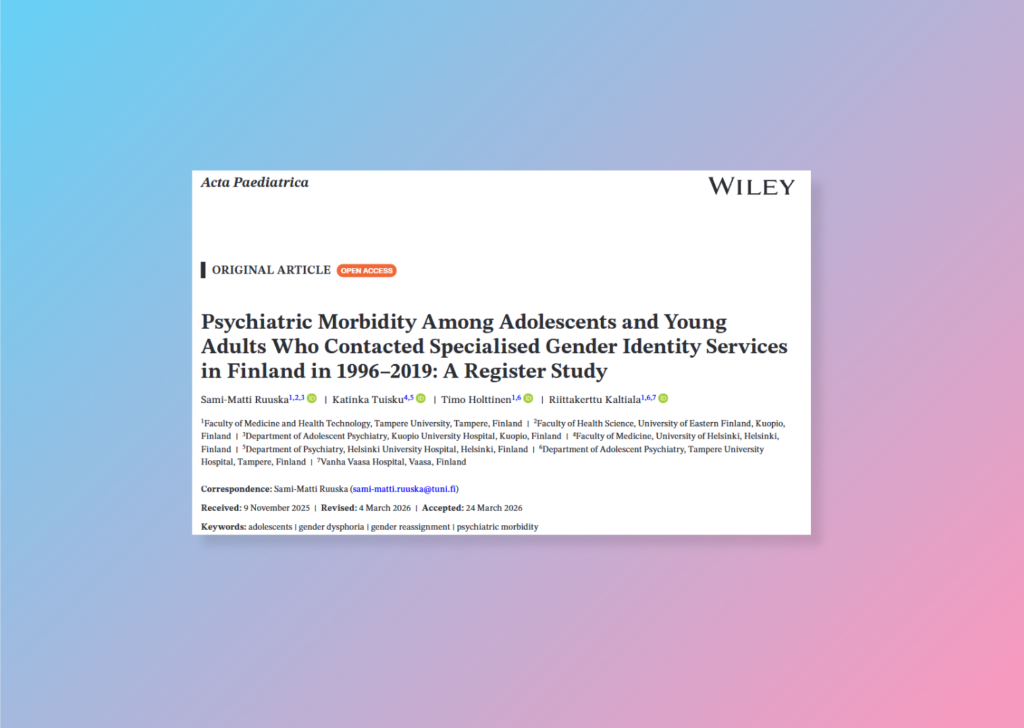
It Is False to Say That Medical Transitions Worsen Young People’s Mental Health
On the pseudoscientific exploitation of a study
Read more
Webinar “A Trans-Skeptical Parenthood” on July 2 at 6:30 p.m.
Trans Youth Trajectories webinar
Read more
2.2% of young people in France are trans or non-binary
Findings from a nationally representative survey
Read more