


A U.S. study by Johanna Olson-Kennedy and colleagues was recently published in the Journal of Adolescent Health. This longitudinal prospective study aims to examine the emotional health of trans and non-binary youth over a 24-month period after the start of gender-affirming hormone treatment. Conducted with 315 participants aged 12 to 20, this research highlights changes in emotional health across several areas, including psychological well-being, social relationships, behavioural effectiveness in facing difficulties, and negative social perception, using standardised measures.
The results indicate a significant improvement in emotional health across all dimensions studied, associated with better alignment between experienced gender and physical appearance. Participants reported a significant decrease in negative affect and negative social perception, as well as an increase in social satisfaction, psychological well-being, and perceived effectiveness in coping with difficulties. These changes were particularly pronounced among young people who had low physical congruence at the start of treatment.
Factor analysis of emotional dimensions revealed that trans and non-binary youth have patterns similar to their cisgender peers, although effectiveness in coping with difficulties stands out as an independent dimension. This distinction may reflect specific needs of trans and non-binary youth in adapting to and managing challenges related to their gender identity.
One notable aspect of the study is the influence of factors such as age, sex assigned at birth and the stage of endogenous puberty reached before treatment. Older youth and those who had not experienced significant puberty before treatment showed faster or more pronounced improvements.
Despite its strengths, such as the wide geographic and ethnic diversity of participants, the study is limited to urban centres where gender-affirming care is available. This limits the generalisability of the results to contexts where these services are not accessible or are prohibited. In addition, the follow-up duration, limited to 24 months, prevents evaluation of the longer-term effects of the treatment.
In conclusion, this study strengthens already established evidence regarding the emotional benefits of gender-affirming hormone treatments for trans and non-binary youth, while building on previous work, particularly the study published in the New England Journal of Medicine in 2023. That earlier research by the same team also demonstrated significant improvements in psychosocial functioning of trans youth after two years of hormone treatment, corroborating the positive effects observed here. Together, these studies underline the crucial importance of early and sustained access to gender-affirming care, while calling for further long-term research to better understand the lasting impacts of these interventions on overall well-being.
To read the study in English, click here.
More news

The Netherlands strengthens its gender-affirming care model for trans minors
The evidence supports gender-affirming care
Read more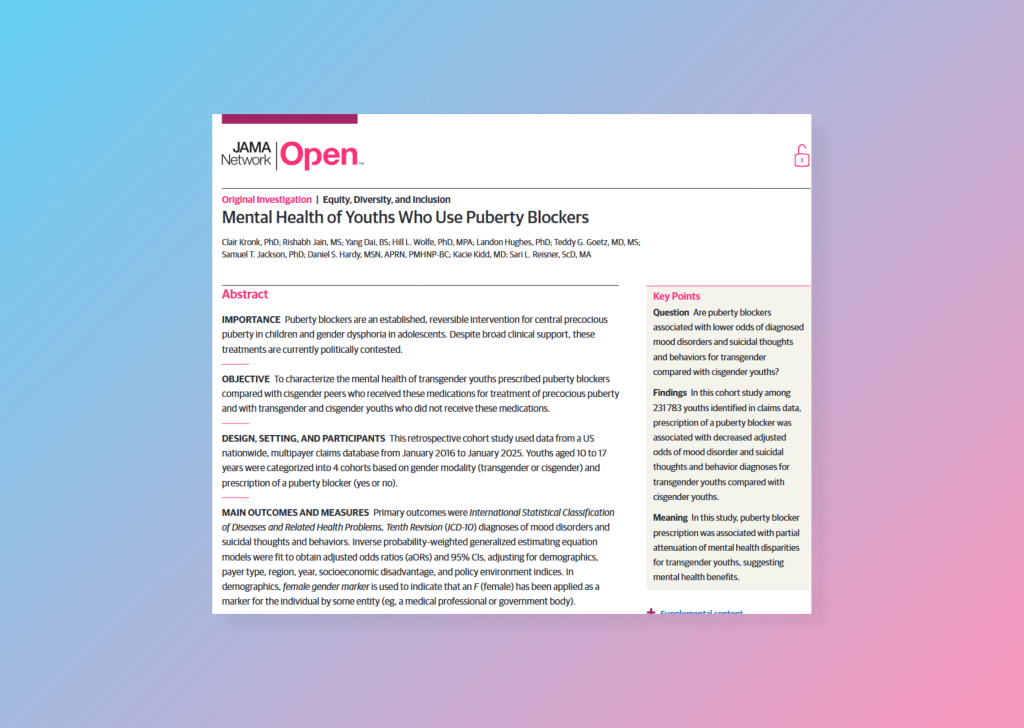
Puberty Blockers and Suicidality: New Study of 230,000 Youths
Lower Suicidality Among Transgender Youths
Read more
Without consent: the scientific misconduct scandal at Norway’s national centre for trans youth
Illegitimate research on trans minors
Read more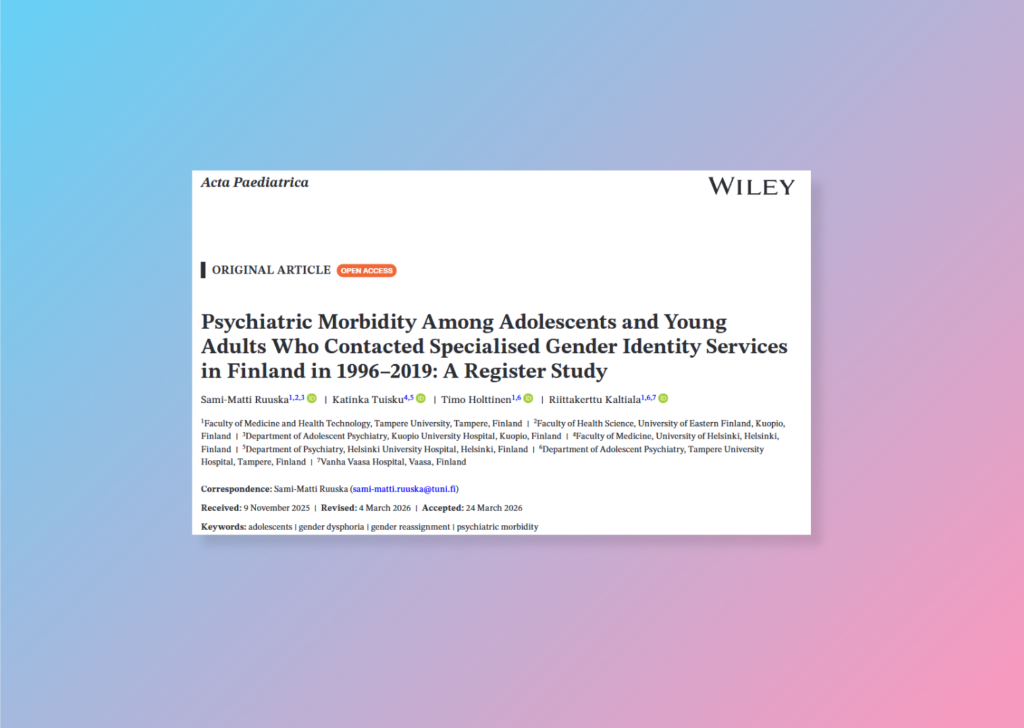
It Is False to Say That Medical Transitions Worsen Young People’s Mental Health
On the pseudoscientific exploitation of a study
Read more
Webinar “A Trans-Skeptical Parenthood” on July 2 at 6:30 p.m.
Trans Youth Trajectories webinar
Read more
2.2% of young people in France are trans or non-binary
Findings from a nationally representative survey
Read more